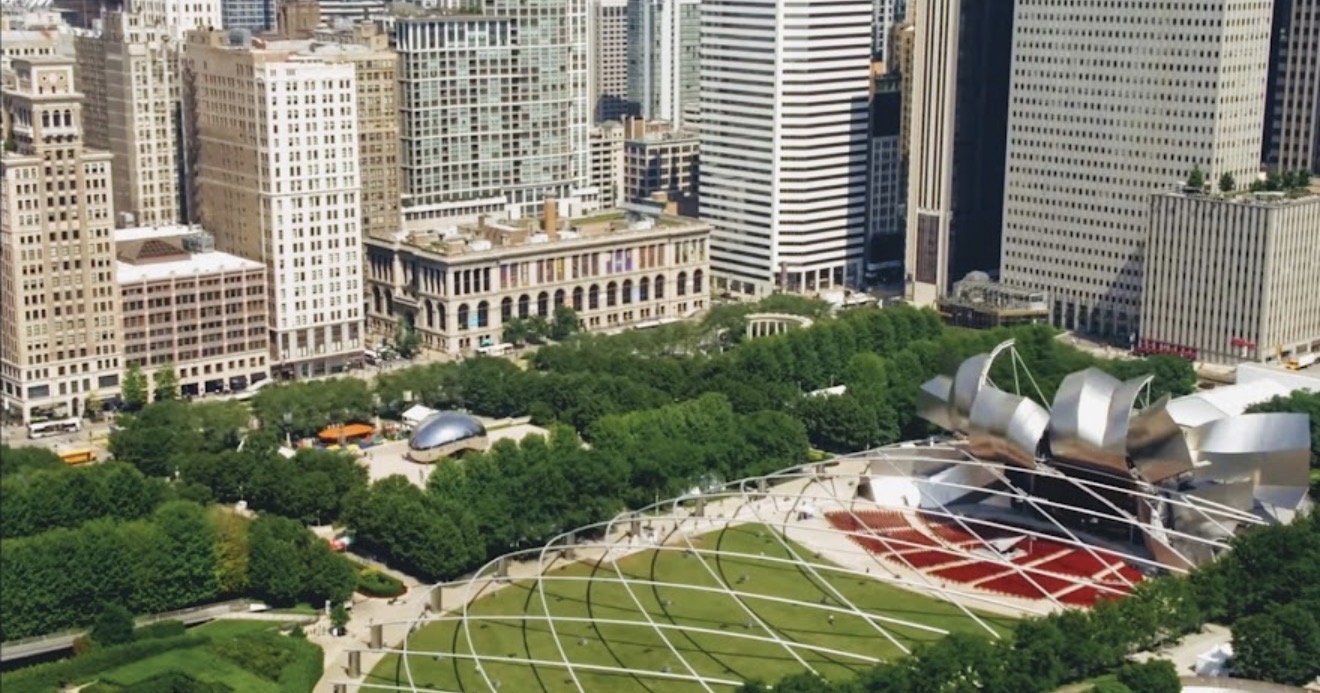
Where Chicago turned public space into an outdoor museum, featuring The Bean, Crown Fountain (also known as the spitting towers) and a 24.5 acre celebration of public art.
The best public art doesn’t just give you something to look at. It gives a city somewhere to be.
Following our visits to Macy’s and The Chicago Cultural Center, we took a short walk to Millennium Park to experience a different kind of art site. The Park sits directly across from the Art Institute, which one could also combine a visit with. After a morning spent indoors exploring Tiffany Domes or The Art Institute, there is nothing like stepping outside to experience a different kind of art entirely — large-scale, public, and built for a city to gather around rather than quietly observe. Two decades after it opened, the park’s two signature pieces, Cloud Gate and Crown Fountain, are still doing exactly what they were designed to do: stopping people in their tracks.
From Rail Yard to Cultural Landmark

It’s easy to forget, standing in the middle of it today, that this 24.5-acre park occupies what was once an active rail yard and parking structure in the Loop. The project opened on July 16, 2004, with a Grant Park Orchestra concert at the Pritzker Pavilion, after years of ballooning ambition and budget — what began as a far more modest plan grew dramatically once major donors started signing on and, in turn, requesting major names to match their gifts. That dynamic is exactly how the park ended up with a roster of internationally significant artists and architects working on a single civic project: Frank Gehry for the Pritzker Pavilion and BP Bridge, Anish Kapoor for Cloud Gate, and Jaume Plensa for Crown Fountain.
The Bean, Properly Introduced

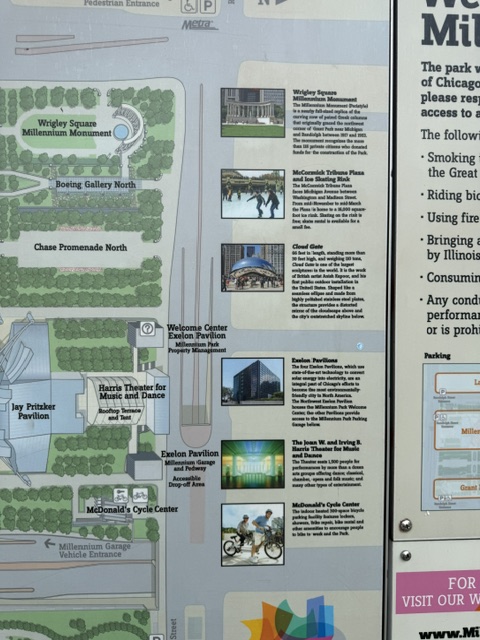
Officially titled Cloud Gate, the sculpture everyone simply calls The Bean is the work of British Indian artist Anish Kapoor, and remarkably, it was his very first permanent outdoor installation in the United States. Kapoor’s design won out over more than thirty competing proposals, including a notably more abstract concept from Jeff Koons, and took roughly seven years to fully realize at a final cost of $23 million — far beyond the project’s early estimates, due in large part to the reinforced retaining wall its 110-ton weight required.


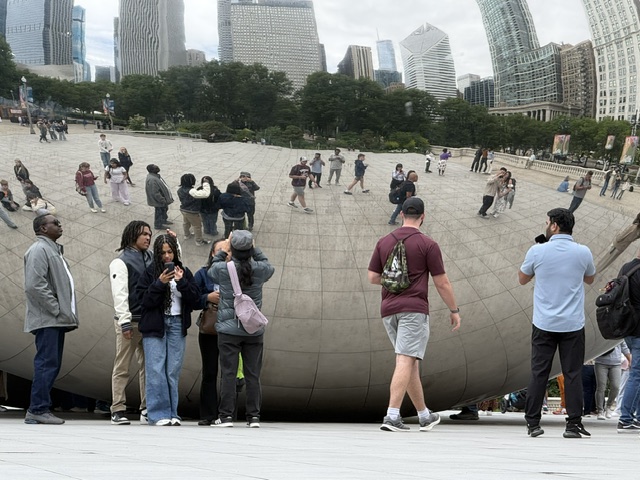
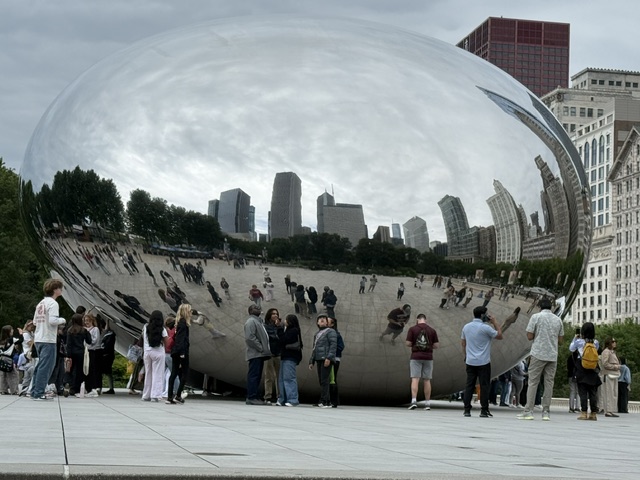
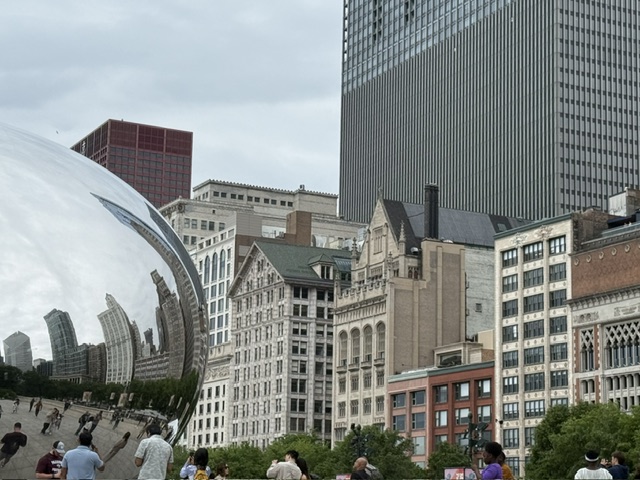
The finished piece measures 33 feet high, 66 feet long, and is built from 168 stainless steel plates, welded together with no visible seams, an effect Kapoor pursued deliberately so the sculpture would read as something impossibly perfect and ready-made rather than fabricated. Its mirrored, mercury-like surface bends the skyline, the clouds, and every visitor standing beneath it into a constantly shifting reflection, and the twelve-foot arch underneath, which gives the work its formal name, invites you to walk straight through to the concave underside — where the distortion only gets more disorienting and more fun. Even Frank Gehry, whose own Pritzker Pavilion sits nearby, has called it the true star of the park.
Crown Fountain and Its Spitting Towers


If Cloud Gate is the park’s photograph, Crown Fountain is its playground. Spanish artist Jaume Plensa was commissioned by Chicago’s Crown family, who had originally imagined something closer to a traditional fountain along the lines of Buckingham Fountain, but Plensa pushed the concept much further: two fifty-foot glass-block towers face each other across a long black granite reflecting pool, each one displaying large-scale video projections of real Chicago residents’ faces, drawn from a pool of a thousand local subjects chosen to reflect the city’s full diversity.
Every few minutes, as each face on screen appears to pucker up, a stream of water shoots from an outlet at the base of the tower directly beneath the projected mouth, creating the illusion that the towers themselves are spitting. It’s a clever, slightly cheeky bit of engineering hiding inside genuine technical sophistication, and it transforms what could have been a static water feature into something unpredictable and alive. In the warmer months, the shallow plaza fills with children running through the spray, which Plensa has said with evident pride was never the fountain’s original purpose, yet has become precisely its most beloved one.
More Than Two Sculptures
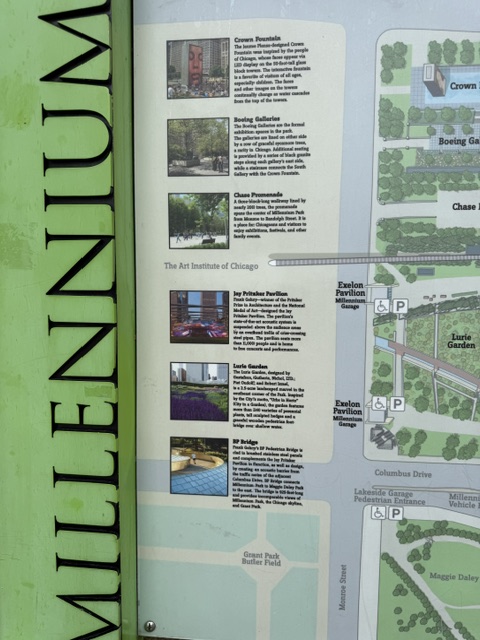
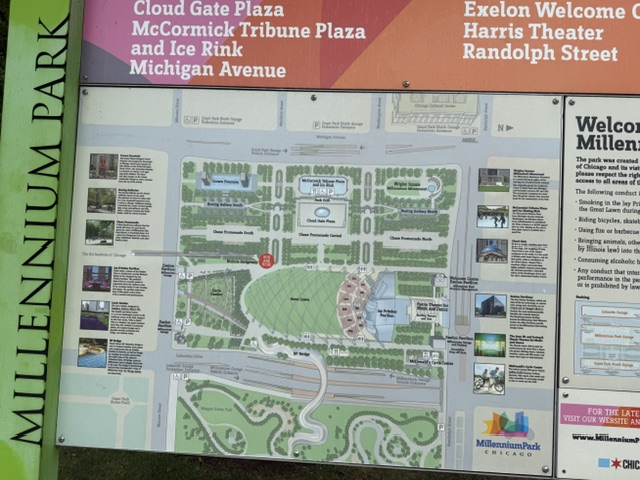
It’s worth resisting the urge to treat the park as a quick photo stop at the Bean and nothing else. The Lurie Garden, a sweeping perennial landscape that emerged from an international design competition, sits just beyond Cloud Gate and offers a quieter, more contemplative counterpoint to the crowds. The Pritzker Pavilion hosts free concerts throughout the warmer months, and the rotating Boeing Galleries showcase contemporary sculpture from artists around the world. Taken together, the park reads less like a single attraction and more like an entire outdoor museum, anchored by two genuinely iconic centerpieces.


Lisa’s Take
What I love about Millennium Park is that it doesn’t ask you to be an “art person.” You don’t need to know anything about Anish Kapoor or Jaume Plensa to walk up to Cloud Gate, see yourself reflected in it, and smile. You don’t need an art-history degree to stand beneath Crown Fountain and watch a child’s delight as water suddenly erupts from a giant projected face.
After spending so much of this trip looking at art inside museums, galleries, historic buildings, and restaurants where craftsmanship is carefully contained, there was something wonderfully democratic about encountering it here. Everyone gets to participate.
And perhaps that’s the real achievement of Millennium Park: it makes art part of everyday life.
Why It Belongs on the List
After the Art Institute and the Chicago Cultural Center, Millenium Park felt like the natural next chapter in our afternoon – art that didn’t require a ticket, a docent, or even an invitation. It simply asked us to walk outside and participate.
Yes, go see the Bean. Take the photograph everyone takes. And then linger. Walk through it. Look at the people reflected along side you. Find the Lurie Garden. Listen for music at the Pavilion. Watch what happens around Crown Fountain. We joked as we watched the security guard delight in watching the children run through the puddles created by the Fountain. What a great post for that job!
The best public art doesn’t just give you something to look at. It gives a city somewhere to be.
Millennium Park has, in the two decades since it opened, effectively replaced the Picasso sculpture downtown as the unofficial symbol of the city — and standing in front of the Bean on a warm afternoon, surrounded by a few hundred other people doing exactly the same thing, you understand why. It’s free, it’s endlessly photogenic, and it manages to be genuinely moving despite, or perhaps because of, how many people are sharing the experience with you at once.
For the rest of where we stayed, ate, and explored on this trip, look for the complete Chicago guide coming soon to The Insider’s Guide. In the meantime, stay tuned for the next blog post in this Chicago series!