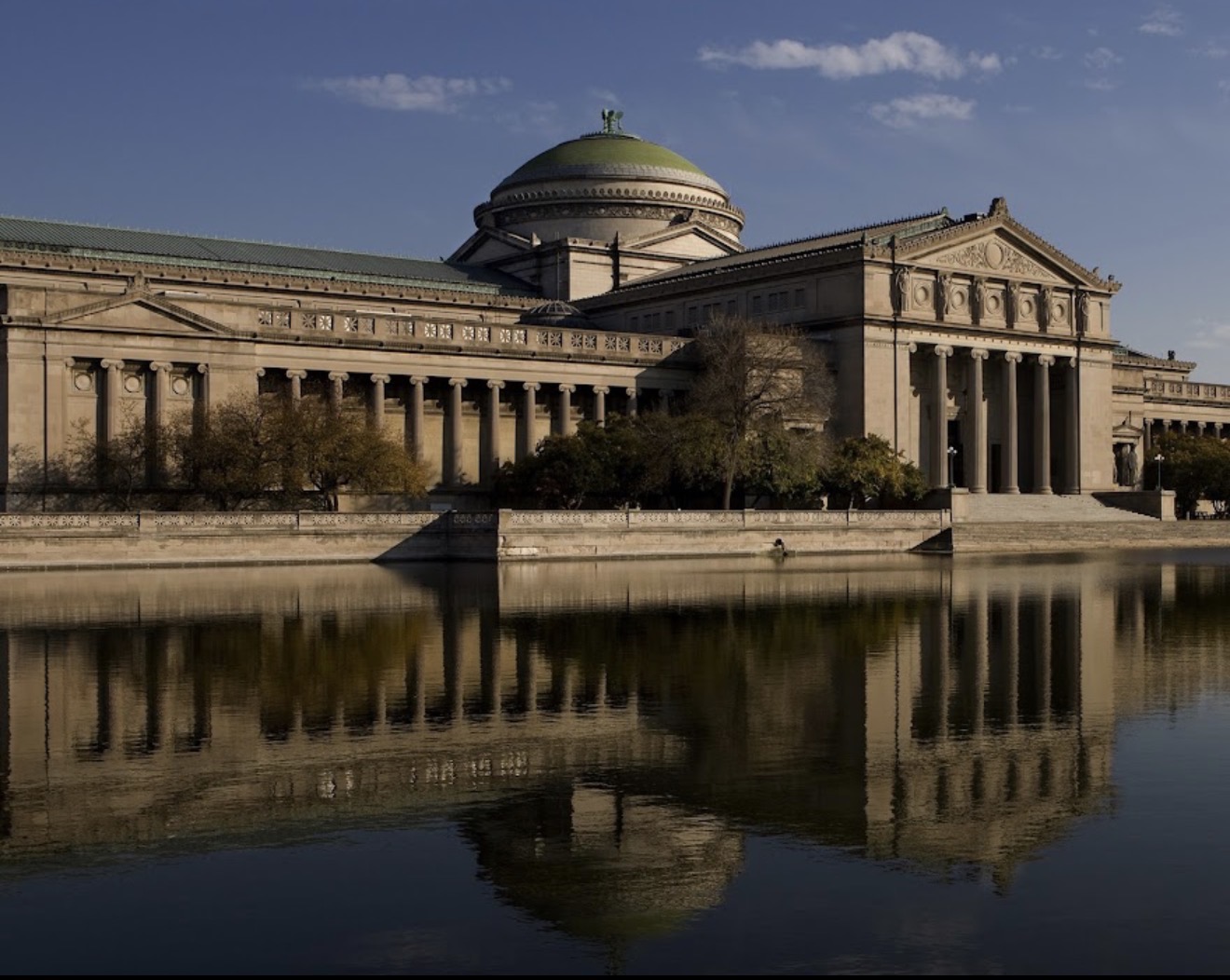
Housed inside the last surviving building of the 1893 World’s Fair, on the shores of Lake Michigan
Most museums ask you to imagine the past. This one puts you inside it. The Griffin Museum of Science and Industry, set in Jackson Park on Chicago’s South Side, occupies the last remaining building from the 1893 World’s Columbian Exposition — and that alone made it worth the trip out from downtown, before a single exhibit was even in view.

A Building With Its Own Remarkable Story

The structure began life as the Palace of Fine Arts for the 1893 World’s Fair, built largely of plaster like the rest of the fair’s temporary pavilions. Unlike its neighbors, it survived, thanks in large part to Sears, Roebuck and Company chairman Julius Rosenwald, who spent millions to preserve the building so it could anchor a permanent museum. That museum opened in 1933 as the Museum of Science and Industry, and it has occupied the same Beaux-Arts building on the lakefront ever since — a rare physical link back to the fair that shaped so much of Chicago’s identity.
A New Name, A Familiar Mission
If the name sounds slightly different from what longtime visitors remember, that’s intentional. In 2024, the museum was renamed the Griffin Museum of Science and Industry in recognition of a $125 million gift from Citadel founder Kenneth C. Griffin — the largest single donation in the museum’s history, and one that effectively doubled its endowment. The rebrand sparked some understandable local debate, but the mission inside hasn’t shifted an inch: nearly a century after it first opened, this remains one of the largest and most beloved science museums in the country.
I have visited museums all over the world, yet I never lose the sense that anticipation that comes from walking into one for the first or even the second time. Every museum has its own personality. The Griffin Museum of Science and Industry immediately feels different- not because of a single exhibit, but because the building itself is already part of the story.
What’s Inside
The scale of the museum is genuinely surprising on a first visit, and the range of subject matter is even more so. In Farm Tech, we watched live chicks hatching as part of the exhibit’s look at the science behind modern agriculture — a small, completely unscripted moment that ended up being one of the most charming of the entire visit. Just around the corner, Yesterday’s Main Street recreates a cobblestone turn-of-the-twentieth-century Chicago block, complete with a miniature, faithfully detailed reproduction of The Berghoff among its storefronts — a nice full-circle moment after our own lunch at the real one downtown.


The Great Train Story remains an essential stop, with a sprawling model railroad tracing the route from Chicago to Seattle in painstaking miniature detail, and the Take Flight gallery overhead, where vintage aircraft hang suspended from the ceiling. Upstairs, Science Storms turns weather into spectacle: we watched a 40-foot tornado form and swirl in real time, alongside exhibits on lightning, fire, and tsunamis that make physics feel like an event rather than a lecture.


Worth the Trip South
Set between Lake Michigan and the University of Chicago in Hyde Park, the museum sits a bit outside the usual downtown loop of sightseeing, but it’s an easy and worthwhile detour. Between the building’s own history, the scale of the exhibits, and the genuine sense of discovery built into every gallery, it’s easy to see why this remains a fixture on so many Chicago itineraries — ours included. One exhibit in particular, Colleen Moore’s Fairy Castle, affected me deeply enough that it earns its own post entirely — stay tuned.
Lisa’s Take
While many visitors focus their Chicago itinerary on downtown, the Griffin Museum of Science & Industry is well worth venturing south to Hyde Park. The exhibits are thoughtfully designed for adults as well as children, and the museum’s setting inside the last surviving building from the 1893 World’s Columbian Exposition adds another layer of history to the experience. If you’re curious by nature—or traveling with children or grandchildren—this is one of Chicago’s most rewarding museums. I’d happily return.
Would I Recommend It? ★★★★★ Absolutely.
Best For: Curious travelers of every age, history lovers, families, and anyone who enjoys museums that invite participation rather than observation.
Allow: At least 3–4 hours.
Don’t Miss: Yesterday’s Main Street, The Great Train Story, Science Storms—and don’t rush past Colleen Moore’s Fairy Castle.
Worth the Trip?
Definitely.
The Griffin Museum of Science and Industry is more than a science museum. It’s a place where history, engineering, design, and imagination come together under one remarkable roof. Even before you step into the galleries, you’re standing inside one of the few surviving buildings from the 1893 World’s Fair. That sense of continuity gives the entire visit an added layer of meaning.
“Some museums teach us facts. The best ones awaken our curiosity.”
For the rest of where we stayed, ate, and explored on this trip, look for the complete Insider’s Guide to Chicago – coming soon. In the meantime, stay tuned for the next post in this Chicago series.