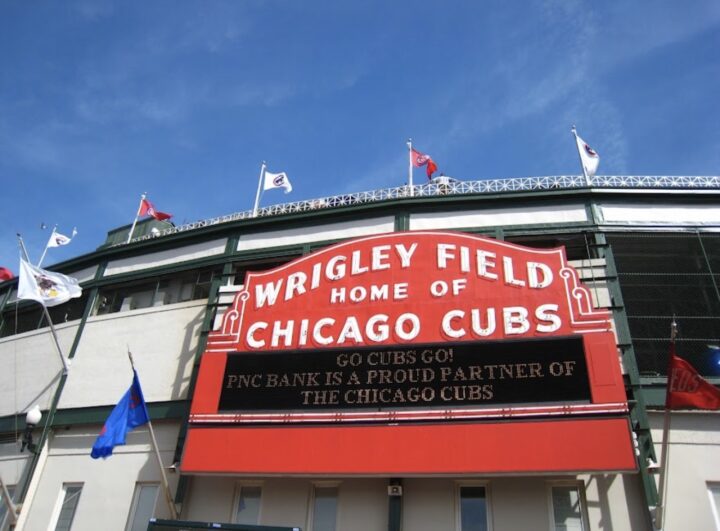
Ivy on the walls, a hand-turned scoreboard, and one of the last truly old-fashioned nights in American sports
Throughout the planning stages for our Chicago trip, Paul’s biggest request for the visit was to see a Cubs game at Wrigley Field. We were fortunate enough to book tickets for a game there on our last night in Chicago. An avid baseball fan, Paul spoke endlessly about the significance of Wrigley Field, and why it mattered, along with a history of the Whales, the Cubs and the Bears.
It was, in some ways, a perfect choice. After a week of tasting menus, museums, architecture cruises, and carefully chosen cultural stops, he wanted baseball — not a museum about Chicago, but the place where Chicagoans were actually living it. An experience that would be authentic, unpolished and alive, and where we would be cheering alongside a crowd of Chicagoans in an historic baseball arena.
And he was right.
The Cubs game at Wrigley Field turned out to be one of the most memorable evenings of the entire trip.
Baseball’s Second-Oldest Cathedral

Wrigley Field has been standing since 1914, making it the second-oldest ballpark still in use in Major League Baseball, behind only Fenway Park in Boston. It opened as Weeghman Park, home to the long-defunct Chicago Whales of the Federal League, and only became the Cubs’ home in 1916 after team owner Charles Weeghman led the group that purchased the franchise. The stadium took its current name in 1926, honoring chewing-gum magnate William Wrigley Jr., who’d bought the team a few years earlier. Remarkably, it remains the only ballpark left standing from that short-lived Federal League era — a small, strange footnote that makes the building feel even more like a genuine artifact than a simple sports venue.
The Ivy and the Scoreboard
The two features everyone comes to see are exactly as charming in person as their reputations suggest. The outfield’s ivy-covered brick walls date to a 1937 renovation overseen by then-owner P.K. Wrigley, who wanted the park to feel more like a genuine green space than a stadium. The popular legend credits team executive Bill Veeck with planting the vines himself the night before a big series; the more reliable historical record points instead to a local nursery family, the Claveys, doing the actual planting that September, under Wrigley’s broader beautification plan. Either way, by midsummer the walls turn a rich, leafy green that simply doesn’t exist anywhere else in the major leagues.

Just as memorable is the hand-operated scoreboard rising above the center-field bleachers, installed the same year as the ivy and still the largest manually run scoreboard in baseball. Three Cubs employees work inside it during every game, climbing up through a trapdoor and manually swapping in steel plates — each one weighing several pounds — to track runs, hits, and errors across as many as a dozen simultaneous games. In nearly ninety years of operation, not a single batted ball has ever managed to hit it, despite a few legendary near-misses over the decades. Watching it update by hand between innings, in an era when every other ballpark has gone fully digital, feels like watching a small piece of living history.
The Atmosphere Around It
Wrigleyville, the neighborhood surrounding the ballpark, has its own infectious energy on game day — bars and restaurants spill over with fans hours before first pitch, and the rooftop seating on the buildings just beyond the outfield walls, where spectators have watched games from above for generations, remains one of the more delightfully unusual sights in American sports. Even the “ballhawks” stationed outside on Waveland Avenue, hoping to catch a stray home run ball, are part of the tradition. Inside the park itself, the stadium has stayed remarkably free of the wall-to-wall advertising that’s overtaken most modern ballparks, preserving a clean, classic sightline that makes the ivy and the brick the real stars of the view.

Sometimes the Best Choice Isn’t Yours
One of the things I have come to appreciate about traveling together is that we don’t always choose the same things. My instincts tend to pull toward art, architecture, restaurants, history, culture and places with a story to uncover. Paul’s often pull toward sports, comedy, theater, a good drink, or something that simply feels like fun.
The advantage of traveling that way is that neither of us gets an itinerary entirely of our own making.
Wrigley was Paul’s choice.
And watching him take in the atmosphere of the ballpark, the crowd, the history, the rituals and the game itself, I found myself enjoying something beyond the baseball. I was enjoying his enjoyment of it.

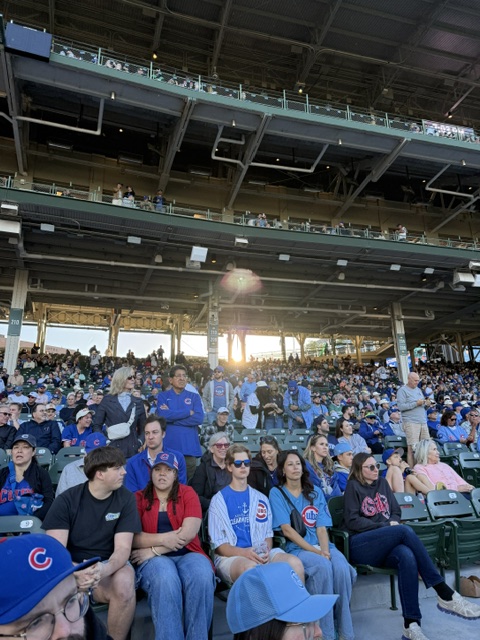
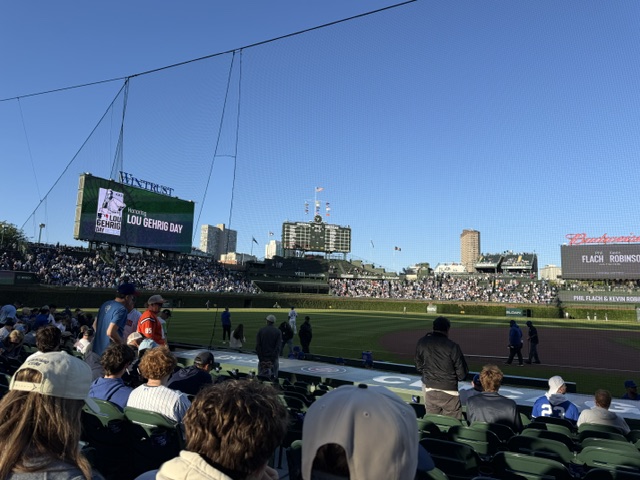
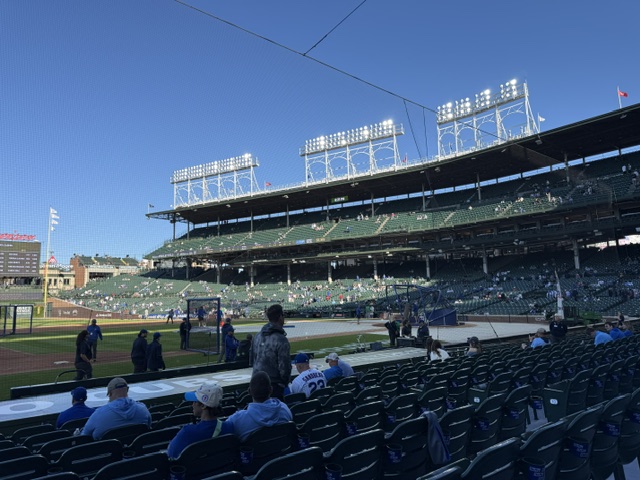
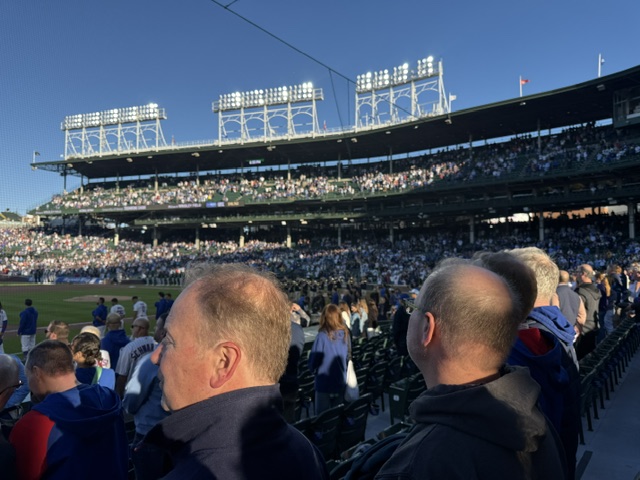
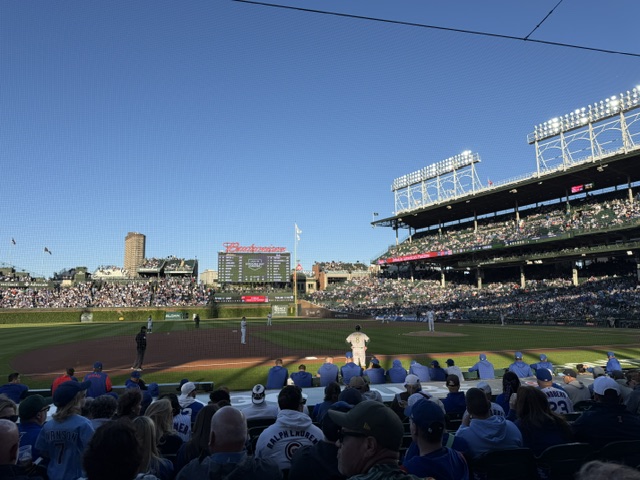
That’s one of the unexpected pleasures of traveling with someone you care about: sometimes the experience becomes memorable because it was yours, and sometimes because it is theirs. Three months later, we are both cheering the fact that the Chicago Cubs have made the playoffs this year.
Why It Belongs on the List
There are more sophisticated ways to spend a final night in Chicago. There are restaurants with tasting menus, skyline views, cocktail bars and beautifully designed rooms. We had experienced plenty of those during the week.
But sitting at Wrigley, surrounded by generations of Chicago baseball tradition, felt like something else entirely — it’s less about the score than the feeling of sitting inside a building that has barely had to change to remain genuinely beloved. After a week of carefully curated Chicago experiences, ending the trip in the bleachers, ivy in view and the scoreboard ticking over by hand, felt like the perfect, unscripted final note.
The choice was Paul’s. The memory belongs to both of us.
And perhaps that’s exactly how a good trip should end—not necessarily with the experience you would have planned yourself, but with one you wouldn’t want to have missed.


For the rest of where we stayed, ate, and explored on this trip, look for the complete Chicago guide coming soon to The Insider’s Guide. In the meantime, stay tuned for the my next blog post in this Chicago series.